ROLE
Lead UX/UI Designer
TIMELINE
1 year
Designing a Multi-Site Healthcare Job Platform
Overview
Medical Jobs Australia is a multi-site recruitment platform that connects healthcare organizations with medical professionals while supporting internal hiring workflows across different regions and facilities. Healthcare teams use the platform to manage job postings, track applicants, and monitor hiring activity, while candidates browse and apply to roles across multiple sites. The project focused on improving employer-side workflow visibility, streamlining job posting processes, and supporting scalable job distribution across a multi-site platform.
Core Product Problem
Clinics and healthcare organizations needed to: ➞ Manage job postings across multiple sites and regions ➞ Track job performance and applicant activity in one place ➞ Create and publish job listings through a structured workflow ➞ Distribute job postings without duplicating work across platforms The existing platform treated these as separate tasks across different systems, making it difficult for employers to manage hiring operations efficiently or scale across multiple sites.
Before → After: Hiring Workflow
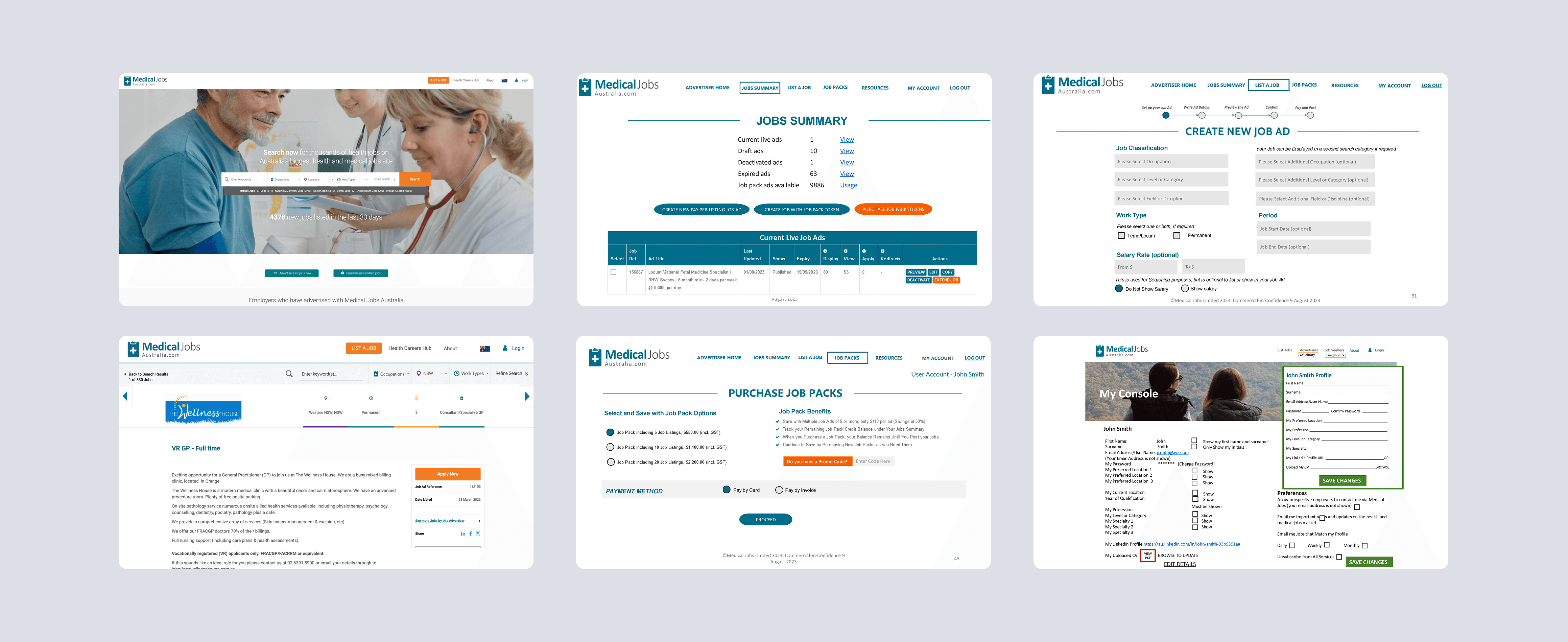
Before
Job management, posting, and applicant tracking were distributed across separate sections of the platform, requiring employers to navigate between different pages to manage hiring tasks. This fragmented structure made it difficult to track job status, manage applicants efficiently, and understand overall hiring activity across multiple sites.
After
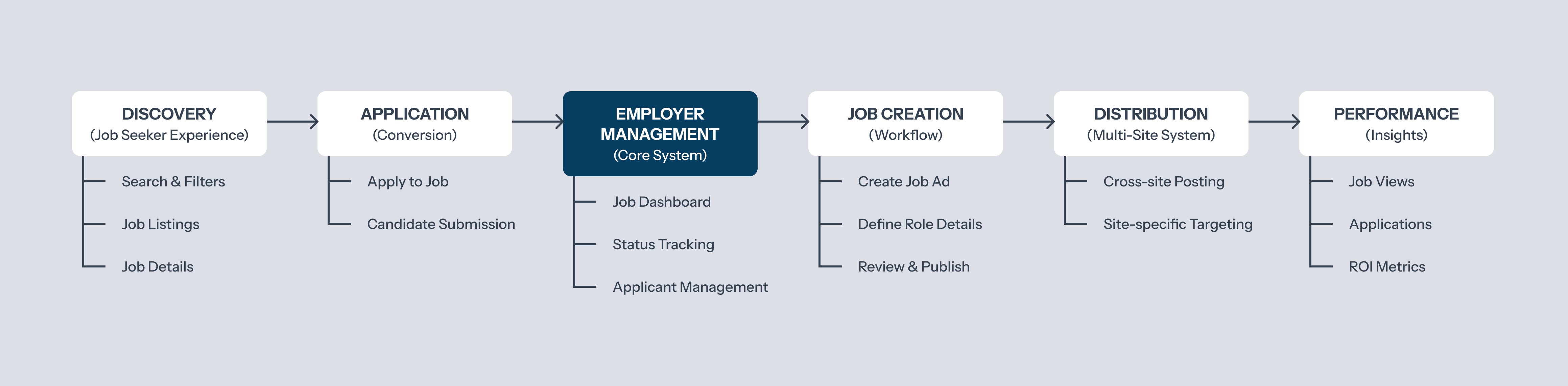
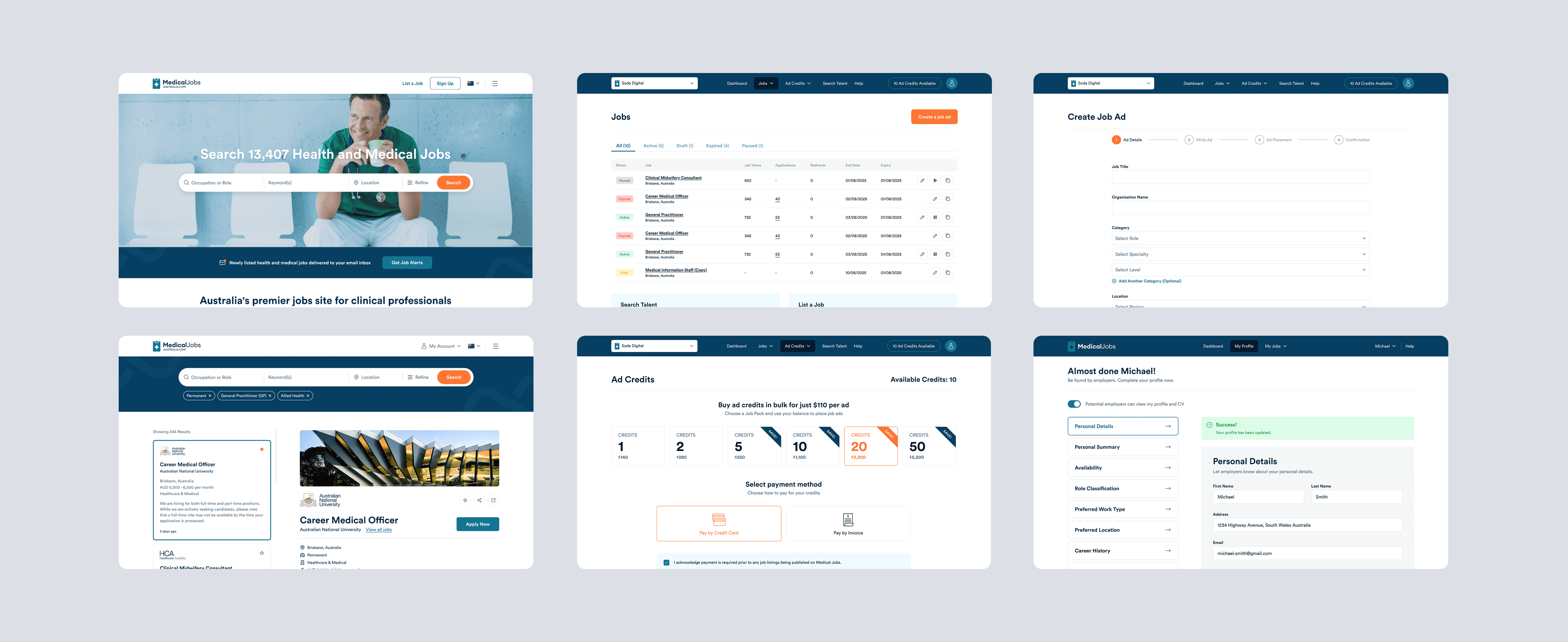
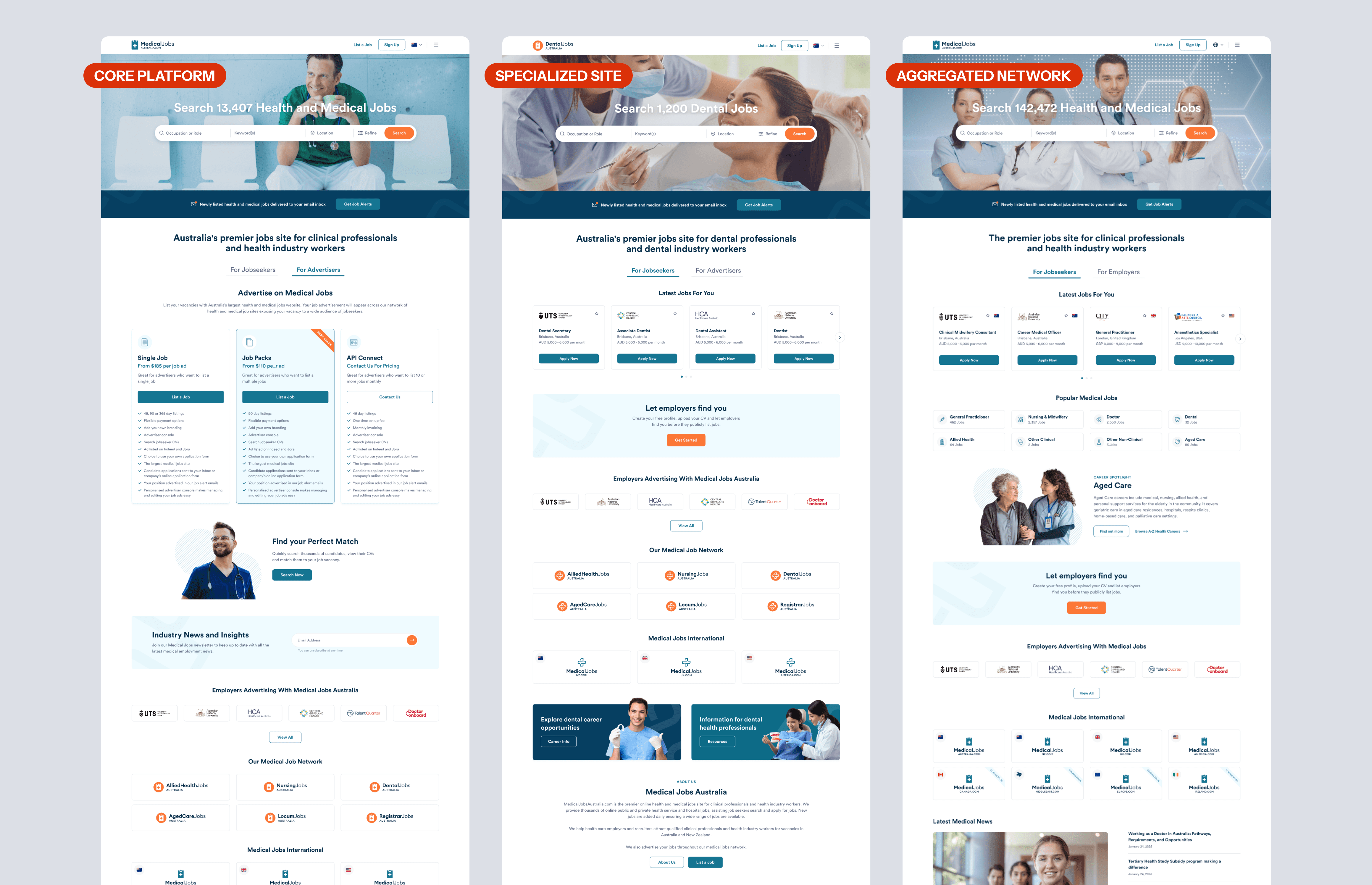
The redesigned platform introduces a more structured hiring system that centralizes job management, organizes workflows, and supports multi-site distribution. Employers can manage job postings, track applicants, and monitor performance within a unified interface, while job seekers can navigate opportunities through clearer search and filtering.
Product Decision 1 — Employer Job Management
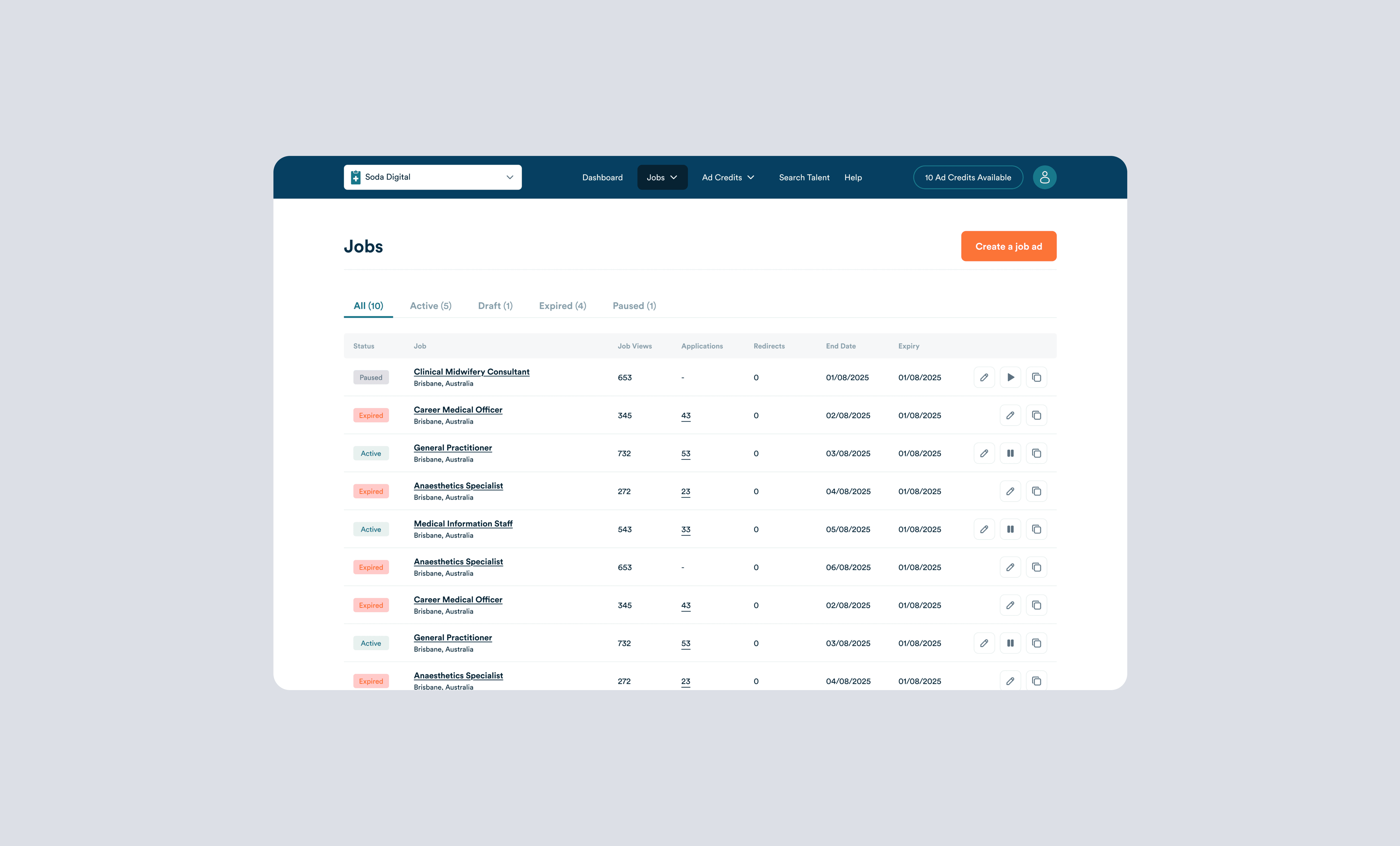
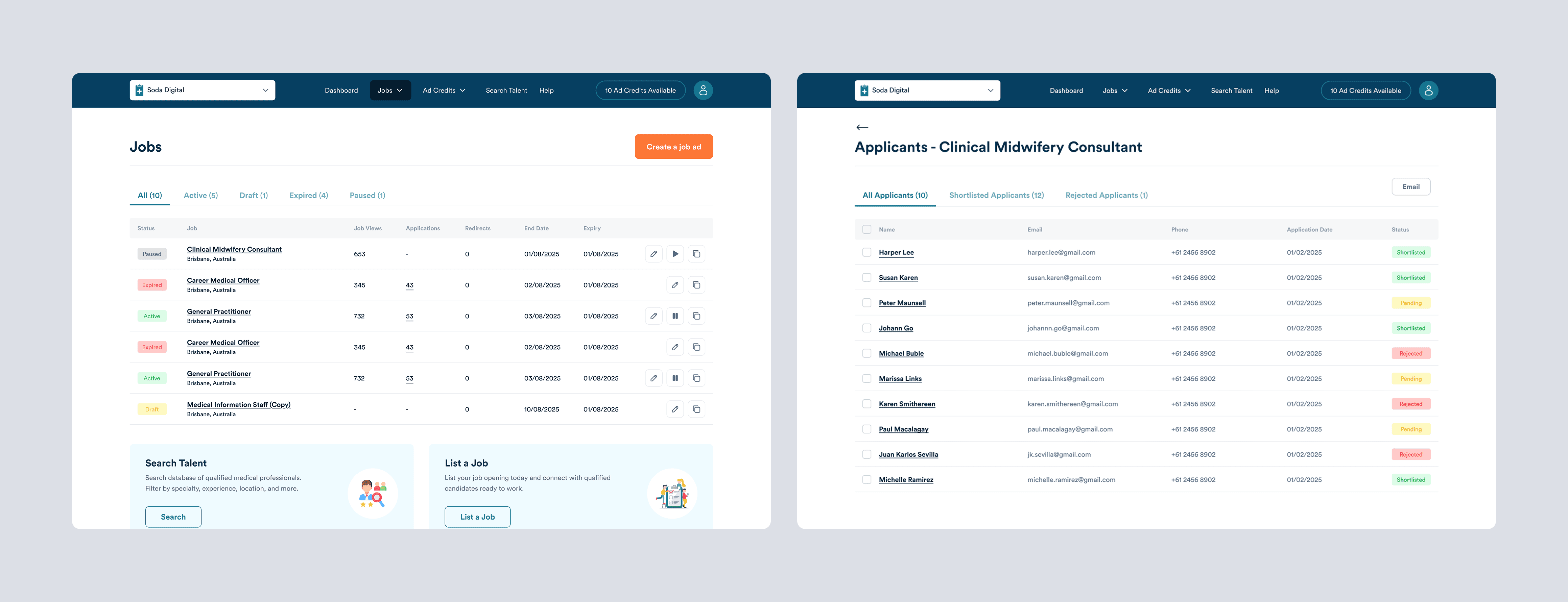
Employers needed a centralized way to manage job postings, monitor performance, and take action across multiple listings. The redesigned interface introduces a structured job management system with status indicators, performance metrics, and quick actions, allowing employers to efficiently track and manage job activity in one place.
Product Decision 2 — Job Posting Workflow
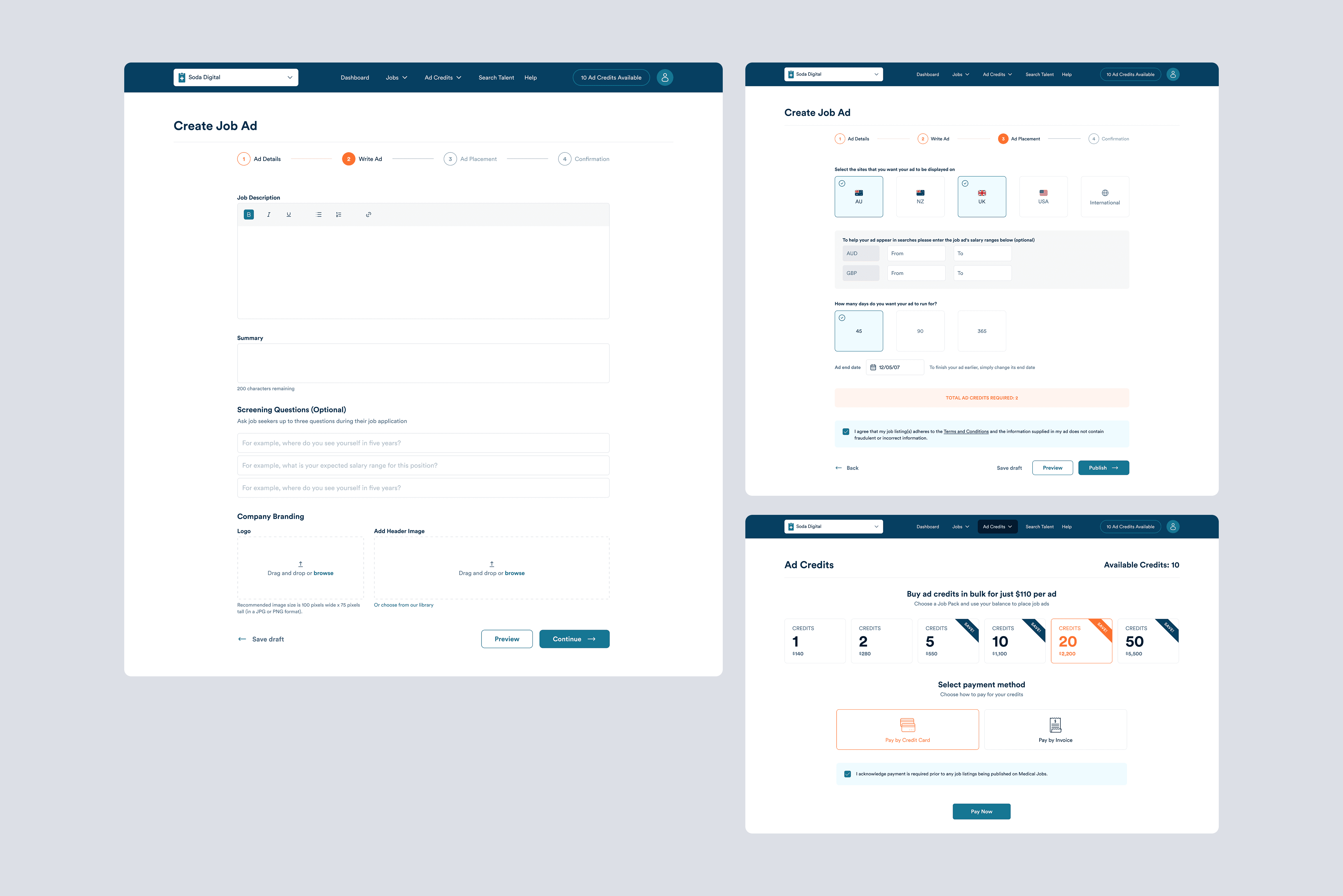
Creating a job listing involved multiple steps, including defining role details, publishing, and managing job credits. The redesigned workflow structures job creation into a clear, guided process, allowing employers to create and publish listings in one flow. Job posting is directly connected to a credit system, so employers can purchase and use job packs without leaving the workflow.
Product Decision 3 — Multi-Facility Operational Visibility
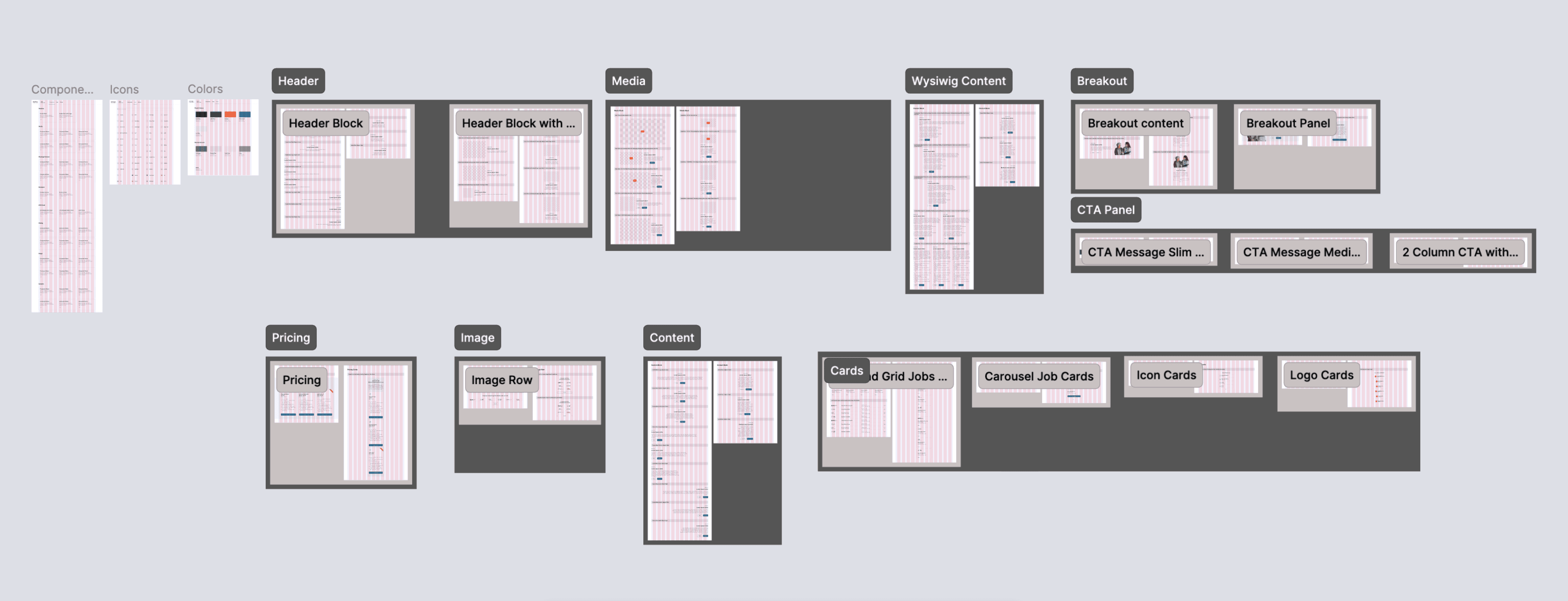
Healthcare organizations needed to manage job postings across multiple sites and regions without duplicating work. The redesigned system supports structured job distribution, allowing listings to be created once and reused across different sites while maintaining consistency and control.
Product Decision 4 — Job Seeker Experience
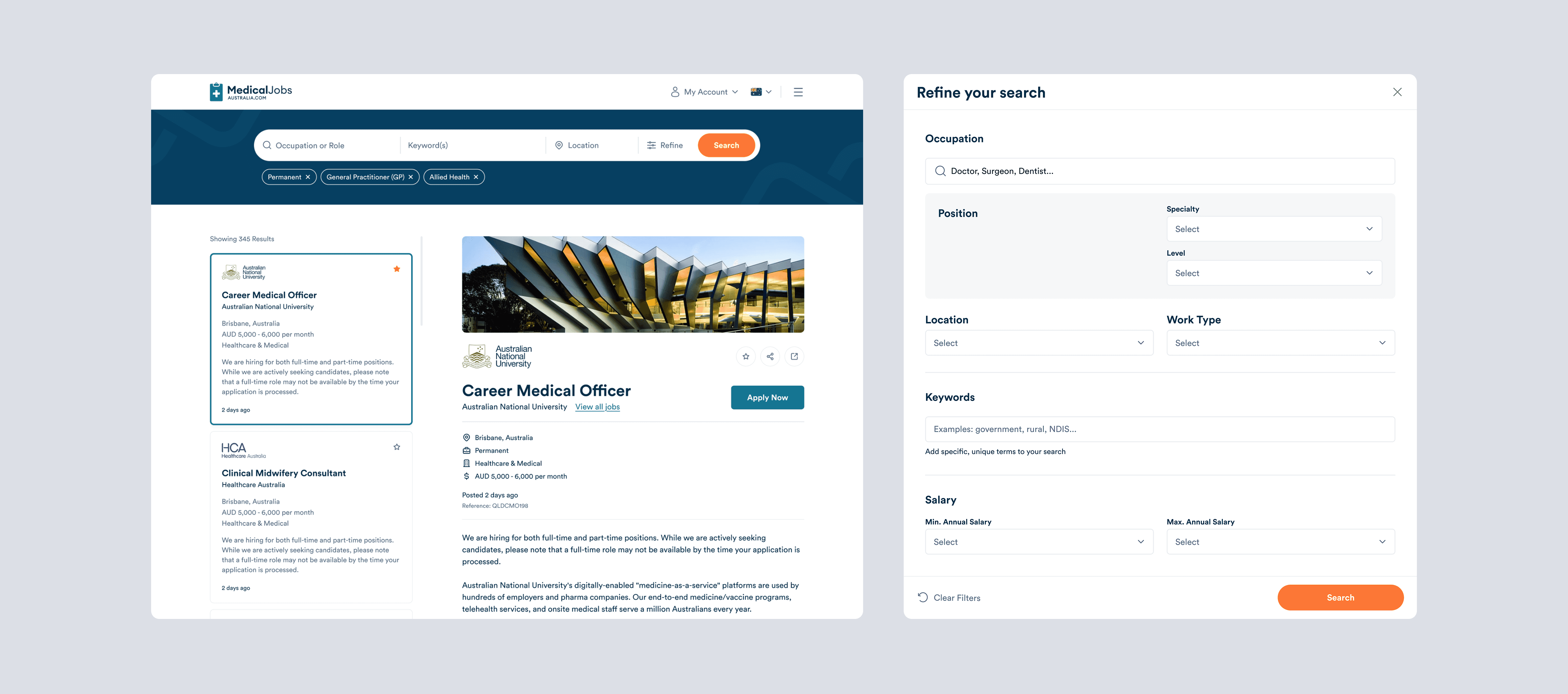
Job seekers needed a clear way to browse and compare roles across locations and organizations. The redesigned interface introduces structured search and filtering, improving clarity when navigating large volumes of job listings and helping users move from discovery to application more efficiently.