ROLE
Product Designer
TIMELINE
6 months
Designing an Outage Management System for Enterprise Operations
Overview
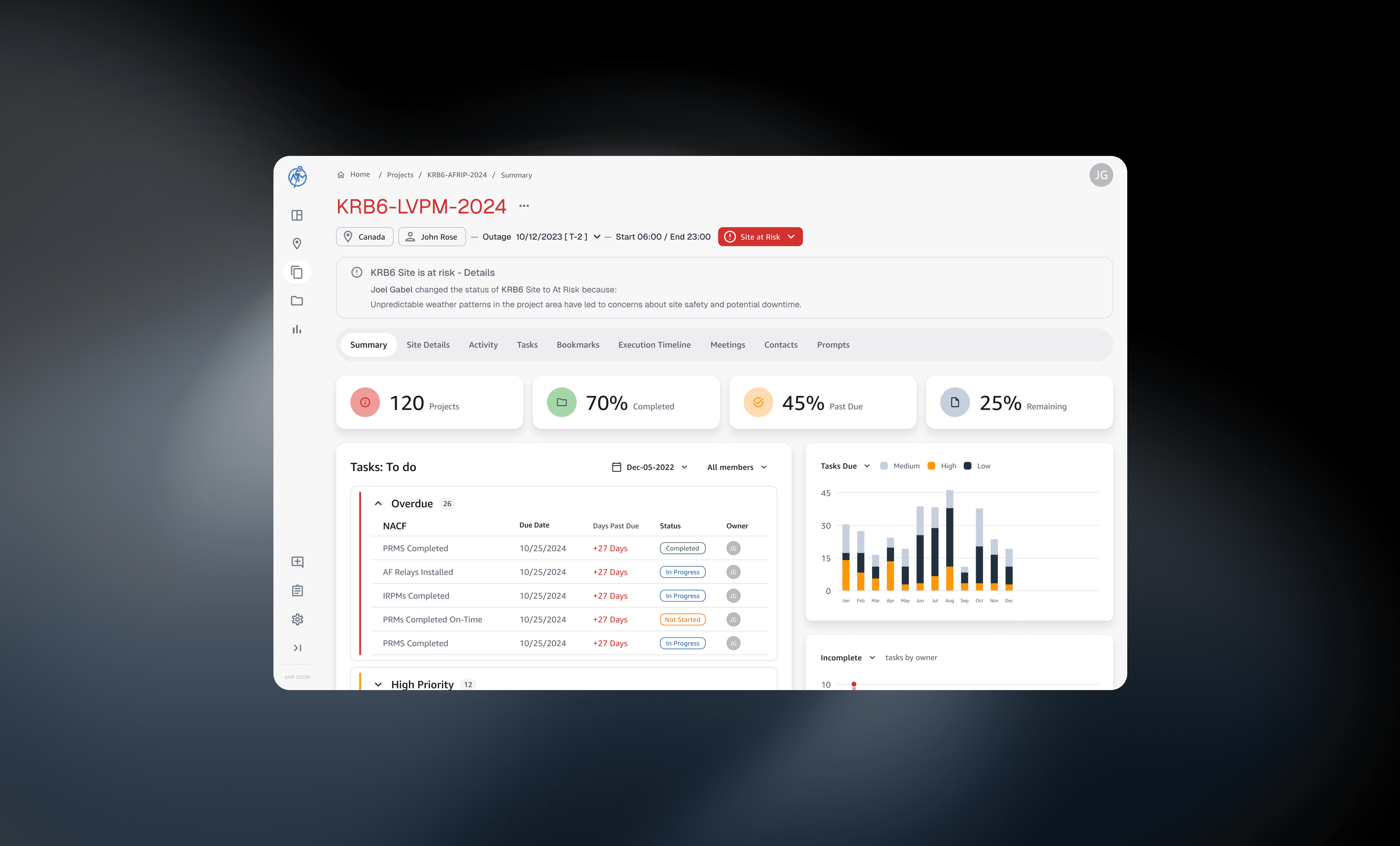
I worked on the design of an internal platform used to plan and manage large-scale operational outages—high-risk events that require tight coordination across multiple teams. The platform brings everything into one place through Projects, which act as the single source of truth for defining scope, aligning tasks, and tracking progress in real time. It replaces the usual mix of spreadsheets, email, and Slack with a more structured way to manage execution and communication. I focused on designing key parts of this workflow within an existing Material Design system, balancing usability with strict UI patterns and engineering constraints.
Core Problem
Teams managing large-scale operational outages relied on fragmented tools such as spreadsheets, email, and Slack to coordinate execution. This led to: ➞ Unclear task ownership across teams ➞ Limited visibility into real-time progress ➞ Inconsistent workflows between projects ➞ Delays in communication during critical operations There was no centralized system to coordinate execution, track progress, and align stakeholders during high-risk operations.
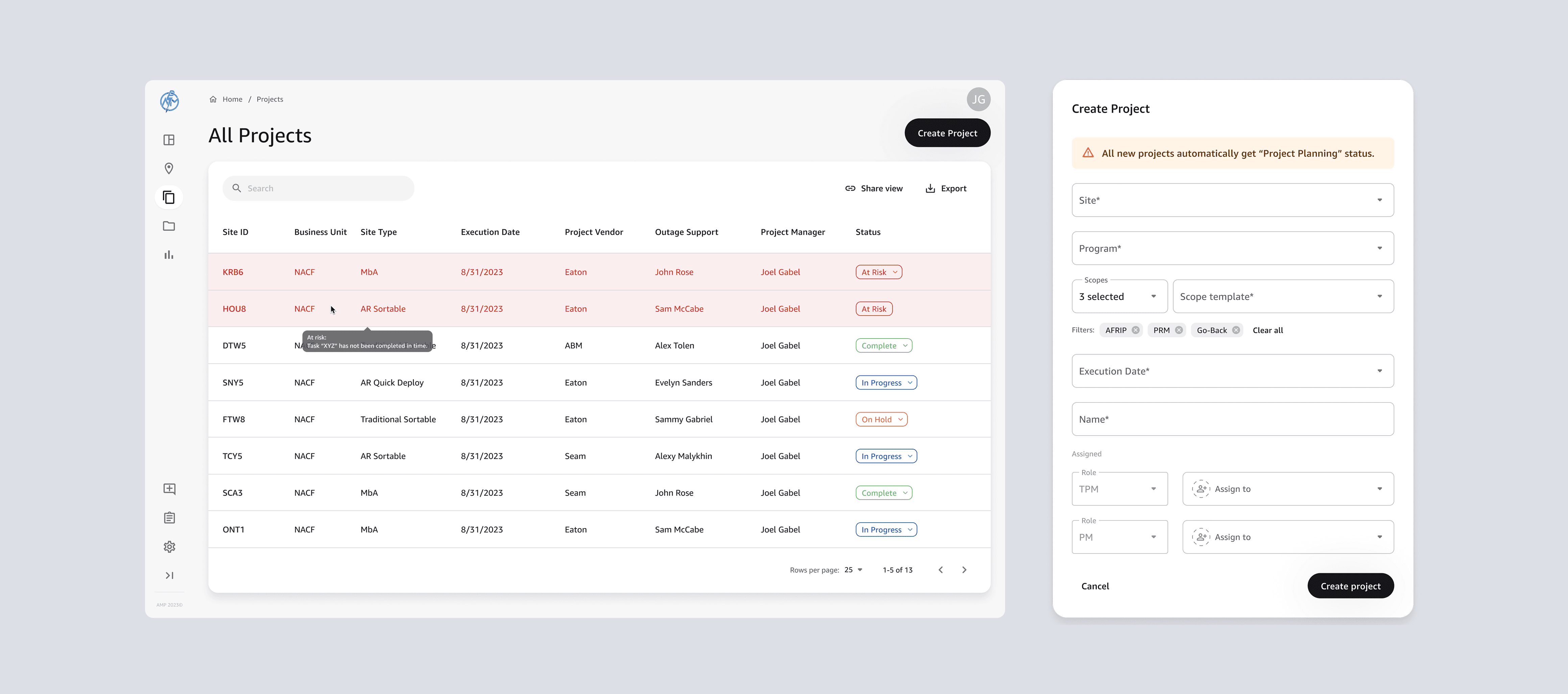
Key System 1 — Project & Scope Setup
The platform introduces real-time visibility during outages. Execution timelines show planned versus actual progress, while outage updates log critical events as they happen, creating a single source of truth during execution.
Key System 2 — Execution Management
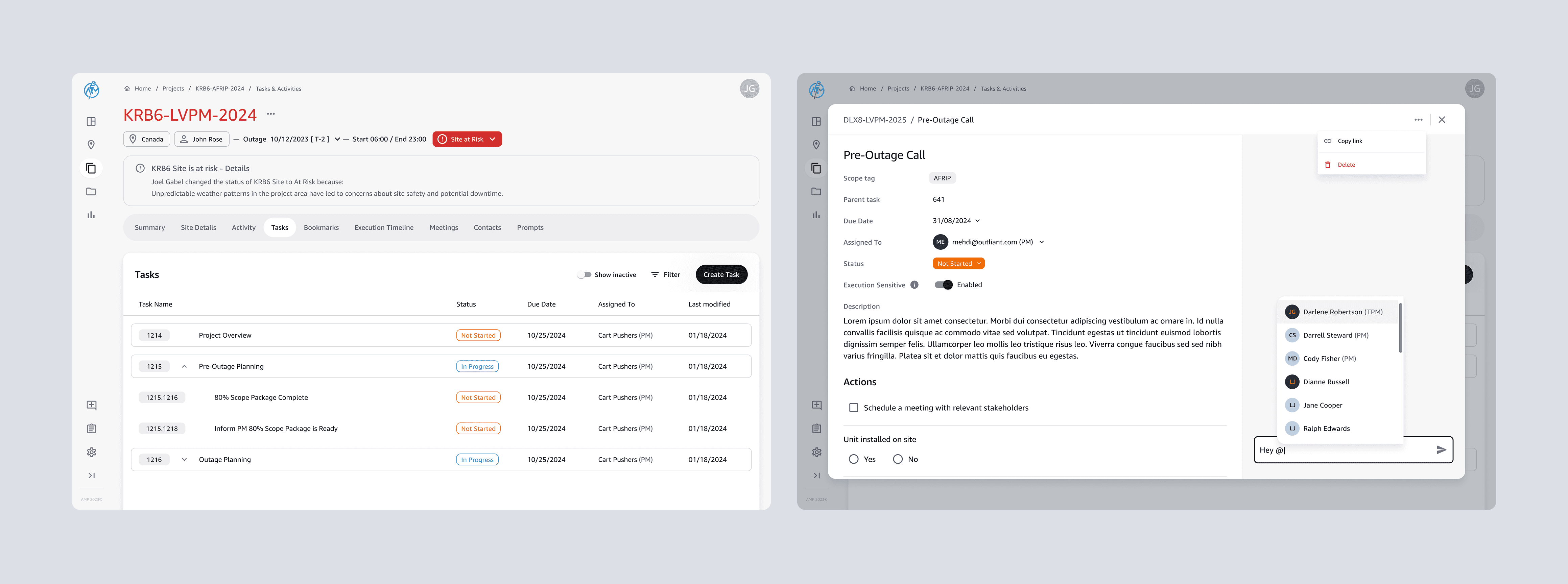
Execution is coordinated through tasks within each project. Tasks define ownership, deadlines, and status, making progress visible and reducing reliance on informal coordination.
Key System 3 — Real-Time Operations
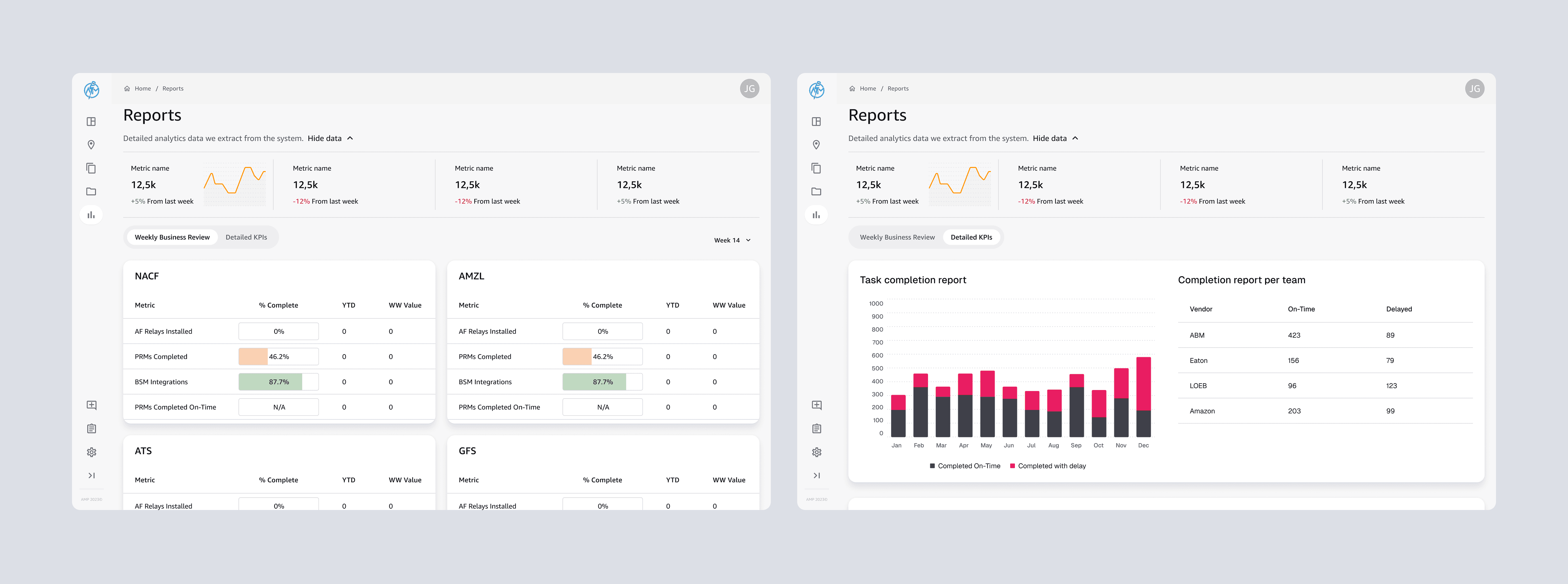
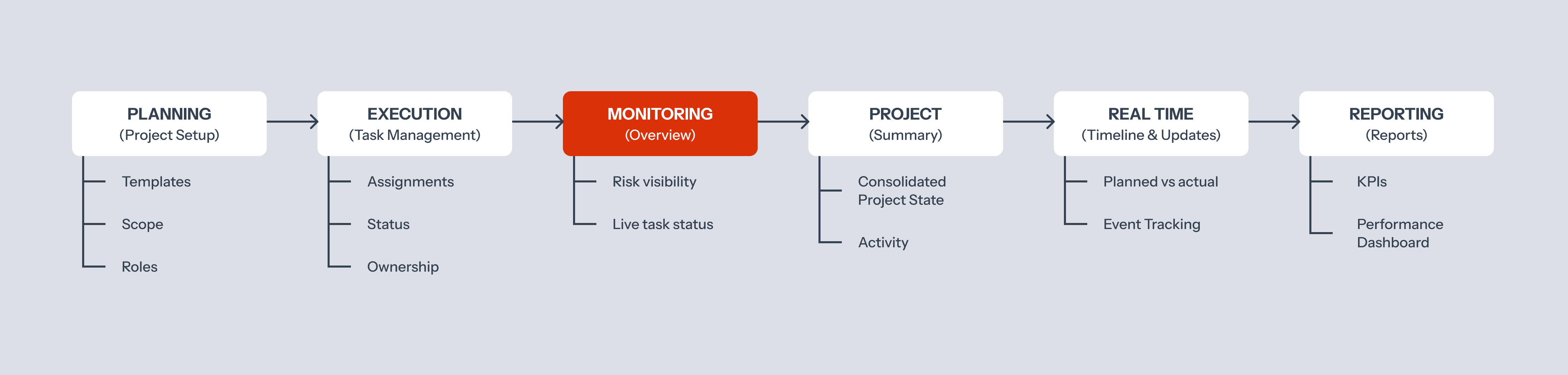
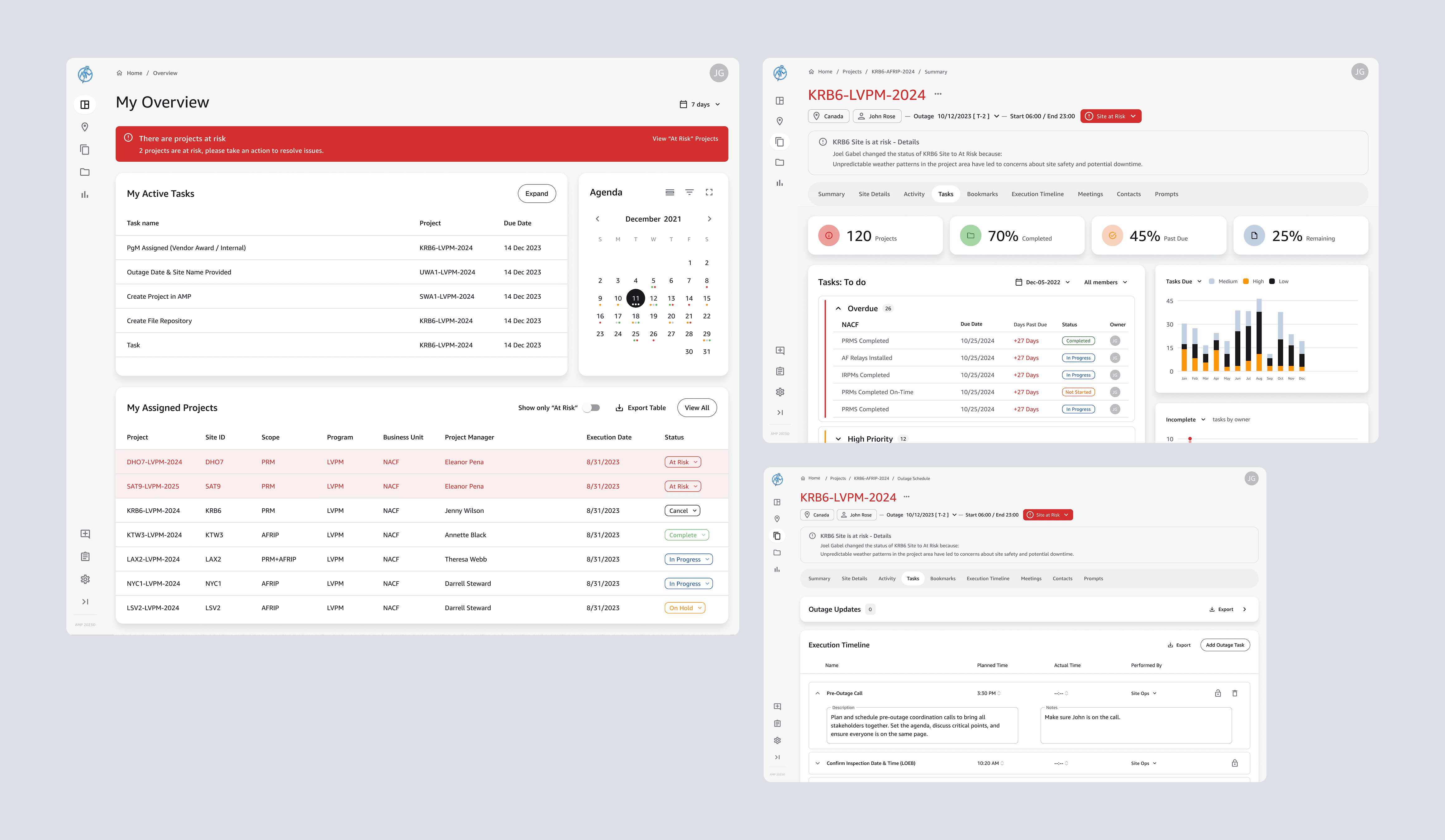
Real-time visibility is structured across levels to help teams quickly understand status and act on issues. The Overview surfaces system-wide risk and activity, while the Summary consolidates project-level details and updates. At the execution level, timelines and outage updates track planned versus actual progress. Together, these views provide a clear, connected understanding of operations during outages.
Key System 4 — Coordination & Communication
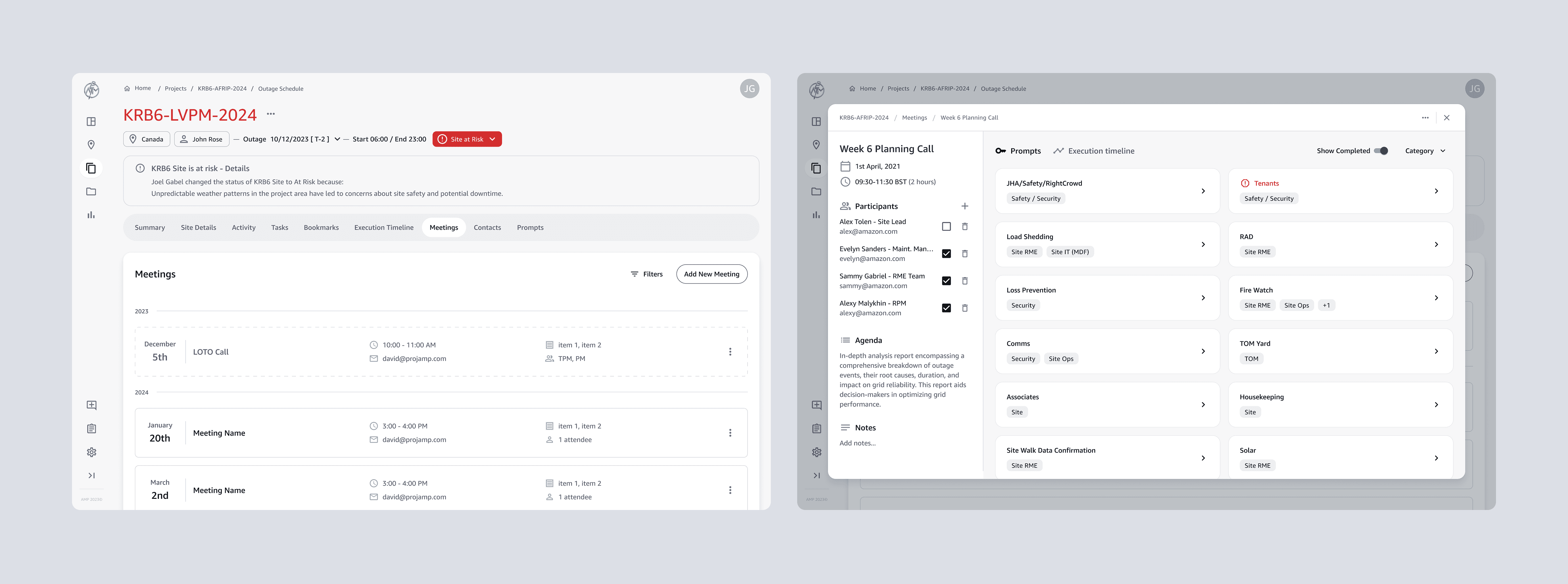
Meetings and prompts bring structure to team communication. Instead of ad hoc discussions, teams align around predefined topics tied to execution and safety, ensuring critical decisions are consistently addressed.